2026.09.03
Facial Asymmetry Self-Diagnosis Checklist — 5 Things to Check Before Correction
A complete guide to facial asymmetry self-diagnosis — from mirror tests and photo comparisons to the 5 structural causes of facial imbalance. Learn the difference between self-care and professional contouring at OM Aesthetic Hanam Misa.
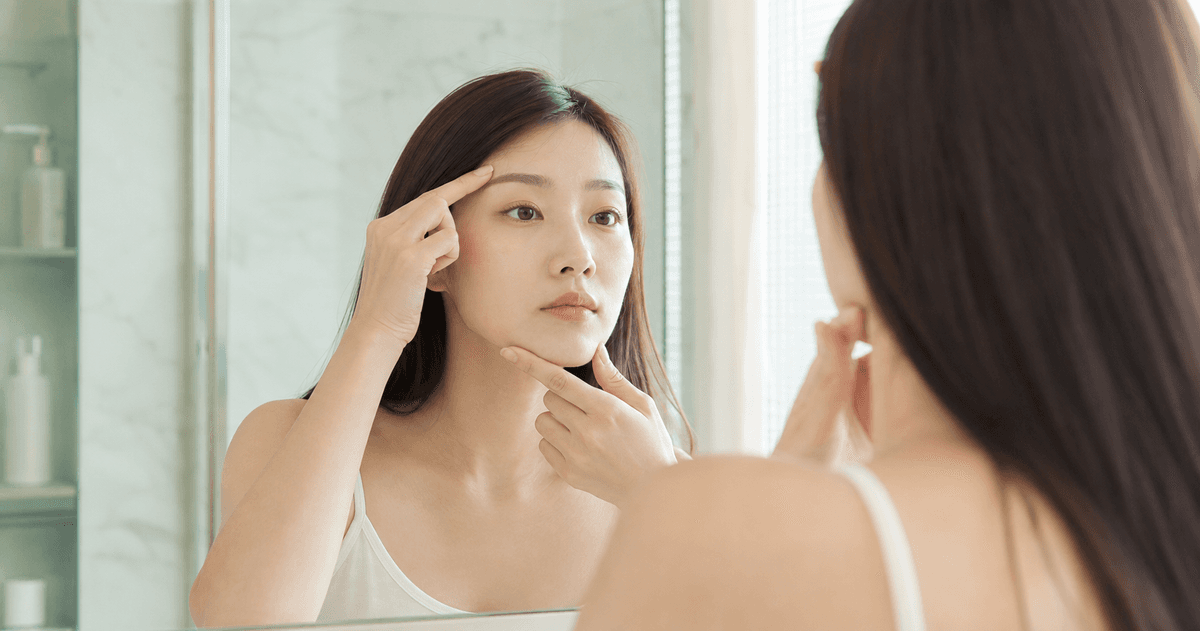
Is My Face Really Asymmetrical?
Every time you look in the mirror, one eye seems slightly smaller. Your smile tilts just a little to the right. In selfies, there is always a "good side" and a side you would rather avoid. If you have noticed these subtle differences, you are not imagining things — and you are certainly not alone.
Here is the important truth: nearly every human face is asymmetrical to some degree. The question is not whether asymmetry exists, but rather how significant it is, what is causing it, and whether it can be corrected without surgery.
This guide provides a practical self-diagnosis checklist, explains the 5 structural causes of facial asymmetry, and clarifies the difference between self-care and professional correction — helping you make an informed decision before seeking treatment.
Facial Asymmetry Self-Diagnosis: 5 Checks You Can Do at Home
1. The Mirror Horizontal Line Test
The simplest and most accessible method for checking facial asymmetry.
- Stand in front of a mirror in natural lighting
- Hold a straight edge (ruler, pencil) horizontally across your forehead
- Compare: eyebrow height, eye size, cheekbone prominence, mouth corner position
- Check whether your chin tip is centered below your nose
Key indicators to watch for:
- Uneven eyebrow height
- One eye appearing smaller or more droopy
- Unequal cheekbone projection
- Tilted mouth corners
- Chin deviation from the center line
If three or more apply, structural asymmetry may be present.
2. The Photo Flip Test
We are so accustomed to our mirror image that asymmetry can be invisible. Flipping a photo removes this familiarity bias.
- Take a straight-on photo with a neutral expression in natural light
- Use your phone's editing tools to flip the image horizontally
- Place the original and flipped photos side by side
The more "unfamiliar" the flipped version looks, the greater your asymmetry. This is one of the most objective self-assessment methods available.
3. Chewing Habit Assessment
Habitual one-sided chewing is among the most common acquired causes of facial asymmetry.
- Notice which side you naturally chew on
- Feel both jaw muscles (masseters) — is one noticeably harder or larger?
- Check for jaw joint clicking, popping, or pain on either side
If one masseter is significantly more developed, muscle-driven asymmetry is likely progressing.
4. Posture and Daily Habit Check
Facial asymmetry is rarely just a face problem. Your entire body posture contributes.
- Do you rest your chin on one hand regularly?
- Do you sleep on one side consistently?
- Do you always cross legs in the same direction?
- Do you carry bags on the same shoulder?
- Have you been diagnosed with forward head posture?
Years of these habits create a chain reaction: spinal misalignment → jaw joint shift → muscle imbalance → visible facial asymmetry.
5. Functional Symptom Check
When asymmetry extends beyond appearance into function, professional assessment becomes important.
- Does your jaw deviate when opening wide?
- Do you hear clicking or popping in your jaw joint?
- Do you experience one-sided headaches?
- Are your shoulders at different heights?
- Is one side of your neck consistently tighter?
Functional symptoms alongside visible asymmetry suggest that structural intervention — not just surface-level care — is needed.
The 5 Structural Causes of Facial Asymmetry
Understanding why your face is asymmetrical is the first step toward effective correction. At OM Aesthetic, we use a 5-layer analysis system to identify the root cause.
Layer 1: Skeletal Structure
The bones of the jaw, cheekbones, and cranium may differ slightly between sides due to genetics or developmental patterns. While skeletal asymmetry itself requires surgical correction, soft tissue management above the bone can create meaningful visual improvement.
Layer 2: Fascia
Fascia is the connective tissue wrapping every muscle, forming a continuous network throughout the body. When fascia on one side becomes shortened or adhered, it pulls facial tissues out of alignment. Fascial asymmetry is invisible to the eye but detectable through palpation — and it requires professional fascial release techniques to address.
Layer 3: Muscles (Especially the Masseter)
One-sided chewing, teeth clenching, and bruxism cause unilateral masseter hypertrophy — creating both a square jaw appearance and visible asymmetry simultaneously. Deeper muscles like the temporalis and pterygoids also contribute. Muscular asymmetry is the most responsive to non-surgical professional care.
Layer 4: Lymphatic Circulation
When lymphatic drainage is impaired on one side, fluid retention creates asymmetrical puffiness. If one side of your face is consistently more swollen in the morning, lymphatic asymmetry is likely involved. This layer shows the fastest visible change after professional treatment, though lasting results require addressing the underlying circulatory cause.
Layer 5: Habitual Patterns
Daily habits — chin resting, one-sided chewing, sleep position — affect all four layers above. Habits are the foundational driver of acquired asymmetry, and without habit modification, asymmetry tends to return even after successful treatment.
Self-Care vs. Professional Care: What Is the Difference?
| Factor | Self-Care | Professional Care |
|---|---|---|
| Measurement | Mirror, photos (subjective) | Plaster cast 3D measurement (millimeter precision) |
| Root Cause Analysis | Surface observation | 5-layer structural analysis |
| Depth of Treatment | Skin and superficial muscles | Deep fascia, muscles, and lymph |
| Masseter Care | Massage rollers, gua sha | Specialized manual therapy + fascial release |
| Progress Tracking | Subjective impression | Before/after plaster cast comparison |
| Habit Correction | Self-motivation | Customized habit modification program |
| Duration of Results | Temporary | Structural improvement with cumulative effects |
Self-care works well for mild puffiness, early-stage muscle tension, and maintenance between professional sessions. Professional care becomes necessary for fascial adhesions, significant masseter hypertrophy, cases unresponsive to self-care for 6+ months, and situations requiring precise measurement and structural analysis.
The OM Aesthetic Approach to Facial Asymmetry
Plaster Cast 3D Measurement
What sets OM Aesthetic Hanam Misa apart is our commitment to measurable results. We create plaster casts of your face before and after treatment, allowing millimeter-level comparison of structural changes. This is not about "feeling like something changed" — it is about seeing and touching the evidence.
5-Layer Structural Analysis
Director Ming (Oh Minji), with 13 years of experience in luxury spa settings and thousands of facial analyses, examines asymmetry across all five structural layers — from skeletal characteristics through fascial adhesions, muscle tension patterns, lymphatic flow, and habitual contributors.
100% Manual Contouring
All treatments at OM Aesthetic are performed entirely by hand — no injections, no devices, no surgery. Our protocol combines fascial release, deep muscle relaxation, and lymphatic drainage in a specialized asymmetry correction sequence.
Practical Information
- Asymmetry Contour Care: 130,000 KRW
- Precision Facial Asymmetry Care: 150,000 KRW (includes deep fascial release + 5-layer analysis)
- Location: 4-minute walk from Misa Station Exit 3
- Parking: Underground parking, 2.5 hours free
- Closed: Mondays
- Booking: Naver Reservation or KakaoTalk
Your Next Steps
Start your facial asymmetry correction with data, not guesswork.
OM Aesthetic Hanam Misa — proving millimeter-level changes with plaster cast 3D measurement.
Book via Naver Reservation or KakaoTalk today.
AUTHOR
Minji Oh (Director)
Founder, OM Aesthetic · 13 years luxury spa experience
Have questions? Book a free consultation.
Free Consultation