2026.09.03
How One-Side Chewing Changes Your Face — Self-Diagnosis for Masseter Asymmetry
Masseter asymmetry is the most common cause of facial asymmetry. Learn how one-side chewing changes face shape, with a self-diagnosis guide.
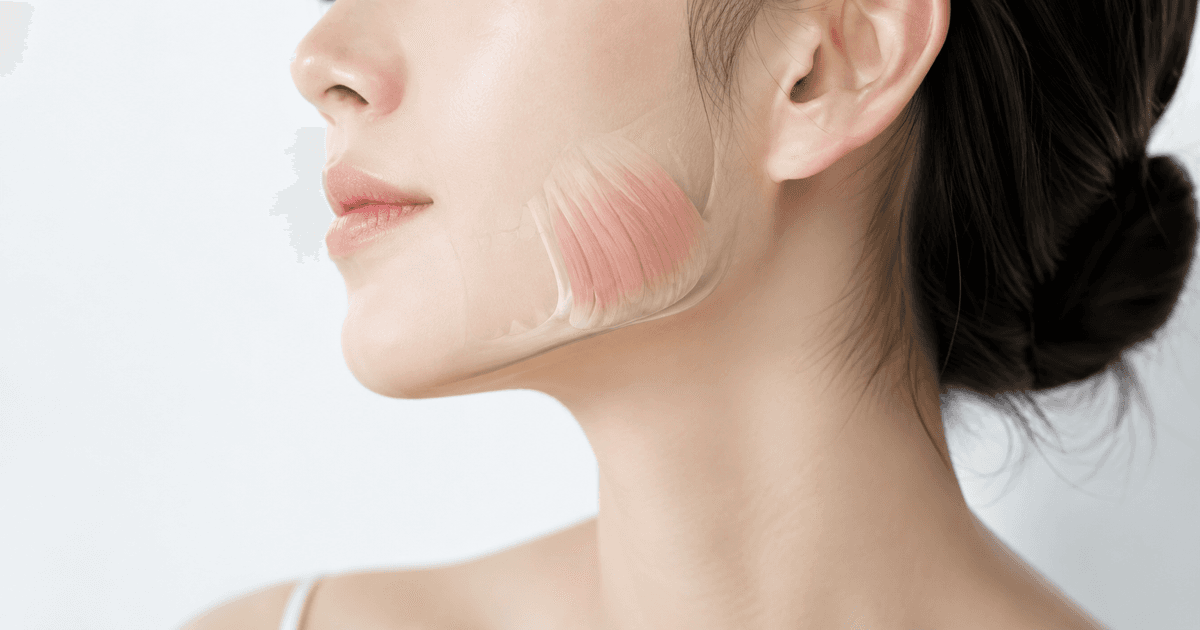
Which Side Do You Chew On?
As you read this, think about which side you primarily use when chewing food.
Most people prefer one side. And when this habit repeats for years, face shape changes.
The Role of the Masseter (Chewing Muscle)
The masseter is one of the strongest muscles in the face, used to close the jaw.
Chewing on one side overdevelops only that side's masseter. When the muscle grows:
Self-Diagnosis: Masseter Asymmetry Check
Check the following in front of a mirror:
Visual Check
- [ ] Left and right jaw angles are different sizes
- [ ] One cheekbone looks more prominent
- [ ] Mouth corner heights differ
- [ ] Chin tilts to one side when viewed from front
Touch Check
Habit Check
- [ ] Always use the same side when chewing food
- [ ] Only use one side when chewing gum
- [ ] Chew on opposite side due to dental pain or treatment
What You Can Do Now
1. Alternate Sides When Chewing
Consciously chew on the opposite side. It feels awkward at first, but becomes natural in 2-3 weeks.
2. Reduce Hard Foods
Chewing tough, hard foods on one side accelerates asymmetry.
3. Jaw Stretching
Opening and closing your mouth wide 10 times daily relieves masseter tension.
When Habits Aren't Enough
If you've been chewing on one side for years, the masseter size difference may be significant. In this case:
- Manual care to release the overdeveloped masseter
- Myofascial release to free adhered tissue
- Habit coaching to prevent recurrence
At OM Aesthetic, we objectively measure masseter asymmetry with plaster molds and design customized care programs.
AUTHOR
Minji Oh (Director)
Founder, OM Aesthetic · 13 years luxury spa experience
Have questions? Book a free consultation.
Free Consultation